
 Search
About AUMA Riester
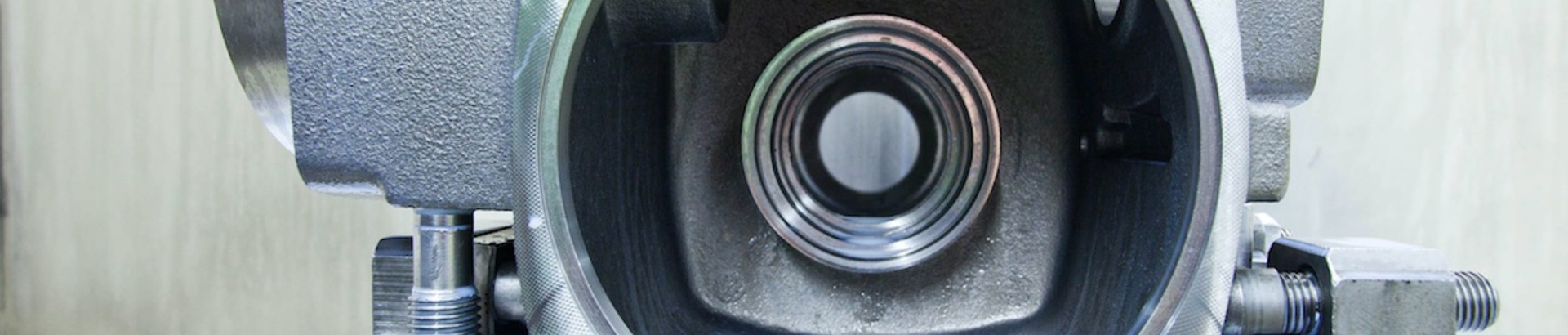
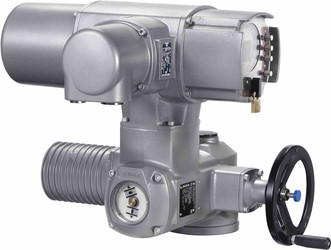
AUMA Riester, with 2,300 employees worldwide, manufactures electric actuators for valves. Actuators are crucial components for any material flow, ensuring the safety and cost-effectiveness of entire industrial plants. Products from this family-run business can be found worldwide in power stations, water supply systems, offshore installations and refineries, as well as in virtually all areas of industrial production. The housings for the rotary unit and control unit are made of grey cast iron or cast aluminium and are manufactured in foundries worldwide.
In Müllheim, various actuator, bevel gear and spur gear housings, as well as output flanges and control housings made of aluminium, are machined to size using high-performance machining centres. Machining operations include drilling, milling, turning, thread milling and thread forming. The machining centres for heavy and light machining generate a great deal of swarf in the process.
The challenge
When AUMA Riester decided in 2010 to switch to modern metalworking fluids in its production processes, the reasons behind this decision were not only production-related but also driven by health considerations and a sense of responsibility towards employees and the environment. This is rooted in values that have long been firmly established within the family-run business.
The aim, therefore, is to move away from metalworking fluids containing ingredients of concern. Although there have been no incidents or complaints from employees to date, nothing is yet known about the long-term effects of frequent contact with the preservatives.
Furthermore, AUMA Riester wishes to act responsibly before any potential risks become apparent. The company also aims to stay one step ahead of legal regulations. “We are all aware that legal regulations are becoming increasingly stringent in the context of growing health awareness,” assures Andreas Völker, Head of Resource Planning at AUMA Riester in Müllheim.
In-depth analysis and recommendations for NOVAMET 910.
In Oemeta Chemische Werke GmbH, AUMA Riester has found a competent partner who is not only a supplier but also a proven manufacturer of metalworking fluids. During the analysis of the situation, residues of the MWF were found in the internal cooling system of the spindles, amongst other things. It also became apparent that the control system for the boron-containing predecessor product had not been optimally adjusted, which had encouraged the formation of mould. A decision was quickly reached to use Oemeta’s NOVAMET 910 universal cooling lubricant.
The solution:
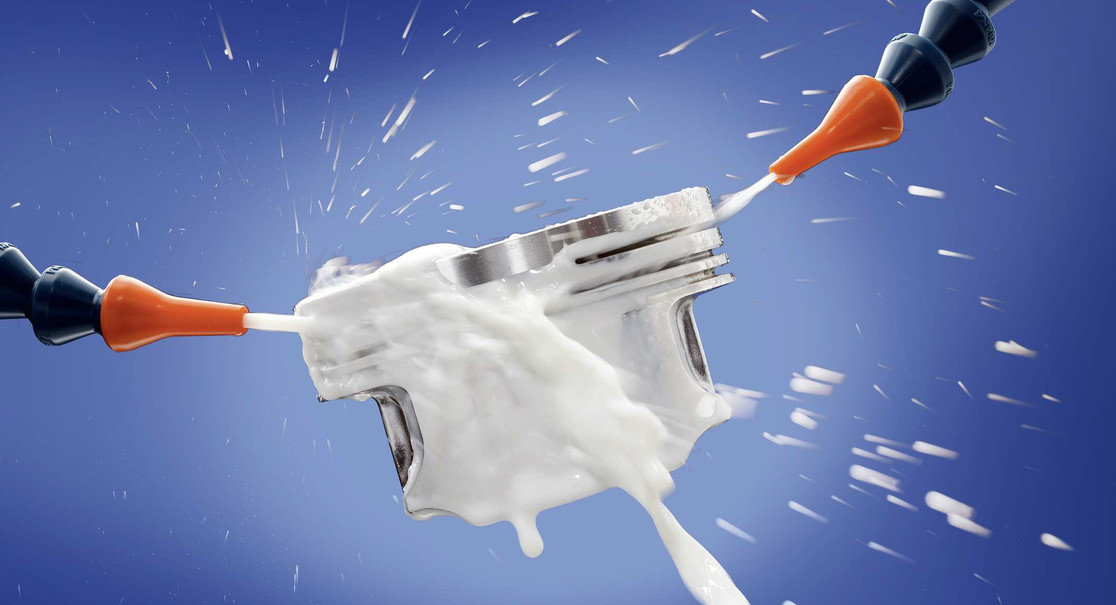
“NOVAMET 910 is a versatile product for machining applications such as turning, drilling and milling, which is characterised in particular by its high performance across a wide range of applications and materials, as well as its low consumption,” says Thomas Matter, Area Sales Manager at Oemeta, who has been supporting AUMA Riester for many years.
High cleaning and rinsing performance, as well as reliable corrosion protection.
NOVAMET 910 is free from boric acid and formaldehyde, is ideal for machining steel, grey cast iron, aluminium alloys and yellow metals, and offers excellent stability and a long service life. Recommended for use on individual machines
and in central circulation systems, it ensures clean machines and workpieces thanks to its high washing and rinsing power as well as reliable corrosion protection. It is also exceptionally skin-friendly. All requirements that were sought after by AUMA Riester.
Improved tool life and cleaning performance.
Following a six-month trial period on two machines using a single supply of 1,500 litres of MWF, the machining properties and benefits of NOVAMET 910 promised by Oemeta were quickly confirmed. “Above all, tool life and cleaning performance were vastly improved,” recalls Andreas Völker. Drilling performance – particularly with small diameters – has also improved significantly thanks to better chip breaking. And so the switch is being made on all machines.
“When we switched to boron- and formaldehyde-free metalworking fluids for machining, contrary to our expectations, our costs initially spiralled out of control,” recalls Andreas Völker. “When we commissioned Oemeta to handle our fluid management, things improved immediately and we now save around 40,000 euros a year, ” reported the head of resource planning at AUMA Riester.
As usual, the metalworking fluid is changed after around six months based on visual inspection and if an odour develops. However, as NOVAMET 910, which is free from boron and formaldehyde, has a higher purchase price than its predecessor, this places a greater financial burden on the production department than anticipated. Particularly following production stoppages in the summer and at Christmas, the metalworking fluid is completely changed due to the odour developed by the
. “In addition to the product costs, there is also the machine downtime caused by the filling time of approximately 240 minutes – not exactly conducive to increased productivity,” recalls Völker.
Fluid management extends the service life of the metalworking fluid.
Thomas Matter explains to AUMA’s management that a loss of productivity can be avoided, introducing them to a fluid management system known at Oemeta as ‘Coolant Management’. The key point is that the service life of the metalworking fluid is extended by around four times to two years, costs are reduced, and the cost of the MWF changeover comes closer to the original estimate.
For AUMA, Oemeta has put together effective measures from a modular system to form a coolant management package. In addition to the procurement of metalworking fluids, the service covers monitoring, maintenance, laboratory services, documentation management, control measures and disposal.
In this specific case, Oemeta provides the following services for AUMA:
- Weekly testing of single-use systems in accordance with TRGS 611 and DGUV Regulation 109-003, including electronic testing using a barcode system
- Complete documentation
- Preparation of a progress report with comments on immediate measures
- Preparation of a weekly to-do list
- Provision of measuring equipment
- Preparation of a maintenance plan (following an on-site assessment)
- Implementation of necessary immediate measures, such as adding concentrate, preservation in the event of bacterial contamination, and adding various stabilisers
“What really won us over was their professional approach,” emphasises Völker. “Oemeta’s service staff even have a route plan that optimises the paths between the machines.” Through regular measurements and immediate action, the metalworking fluid can be used for significantly longer on each machine without losing performance. Lubrication performance remains optimal at all times and is “far superior to before.” Taking all factors into account, these improvements result in:
The following improvements have been made:
-
Reduced MWF consumption and increased machine uptime thanks to fewer re-machining operations
-
Cost reduction in terms of re-coating, man-hours and disposal
-
Increased process reliability and assurance of continuous improvement
-
Prevention of machine downtime caused by fungal growth and extreme fluctuations in concentration
What impressed Andreas Völker most was “the fact that Oemeta offers this service and accepted the contract, even though it meant a drop in turnover because we need to order new metalworking fluid less frequently.” This is not a contradiction in Oemeta’s philosophy, as Regional Sales Manager Gerrit Walker notes: “For us, people, the environment and long-term customer relationships are the priority, not a quick profit.” And so Walker also hopes for customers who are willing to be patient. “Because things improve quickly. But they only reach their optimum when you can draw on comparative months.”
Coolant management is intended to become part of the continuous improvement process (CIP) and contribute sustainably to increased productivity. All those involved confirm that this has been impressively achieved at AUMA Riester, partly because AUMA Riester and Oemeta, as family-run businesses, share similar values. And so, beyond the considerable annual cost savings of 40,000 euros, there remains the satisfying feeling of having done something for the health of the employees and the environment.


 United Kingdom
