The production process as the key to efficient and sustainable manufacturing

Oemeta develops products and solutions with the aim of combining high technical performance with the responsible use of resources. This is the only way to achieve economic and environmental sustainability. In addition to an extensive range of products, our experienced engineers are on hand to advise our customers on how best to integrate the appropriate concepts into their manufacturing processes.


New requirements regarding the procurement and use of operating resources

Anyone involved in the production of goods today cannot avoid the question of whether their actions meet sustainability criteria. The decision as to whether a production process is carried out efficiently and in a resource-conserving manner can be determined as early as the procurement and use of operating materials such as metalworking fluids (MWF). 

As specialists in high-performance metalworking fluids, we combine technical excellence with a responsible approach to the environment, our employees and resources. As a reliable partner, we support manufacturing companies worldwide in designing their production processes to be efficient and resource-conscious.

The UN’s 17 Sustainable Development Goals as a benchmark for our business

Oemeta’s aim is to ensure that all measures and technologies are state-of-the-art, in order to contribute to the achievement of the 17 UN Sustainable Development Goals (SDGs).

Oemeta categorises all sustainability aspects into three dimensions and bases its implementation on these 17 UN goals. Naturally, it is not possible to address all the goals within the context of the use of process materials, but only those that can be specifically targeted.


Life Cycle Assessment Study

A study (Life Cycle Assessment, LCA) has shown that Oemeta’s two-component metalworking fluid HYCUT results in a lower environmental impact in metalworking than a conventional MWF system.


Find out more about this study

Here are the three areas we are focusing on:

Environmental aspects

  • Use of the highest possible proportion of renewable raw materials (currently around 50 per cent of base oils from renewable resources)
  • Electricity from renewable energy sources (improvement of the carbon footprint through, for example, electric company cars, more sustainable production processes at customer sites, and improvements in environmental and social compatibility)
  • Certified to DIN EN ISO 9001 and DIN EN ISO 14001

Economic dimensions

  • Optimising the sustainability of customers’ production processes, e.g. by minimising consumption (through improved process performance), reducing waste (through recyclability) and minimising energy consumption, as well as through partnerships to promote sustainability (such as filtration).
  • Strengthening the company’s resilience through internationalisation into all core markets in the metalworking sector

Social dimensions

  • Establishing an occupational health management system at Oemeta
  • Optimisation of OAG’s knowledge management
  • Regional support (e.g. through fundraising campaigns)
  • Development and marketing of products with good tolerability
  • Awarded the BG ‘Sicher mit System’ quality mark

Ideas and measures for greater sustainability

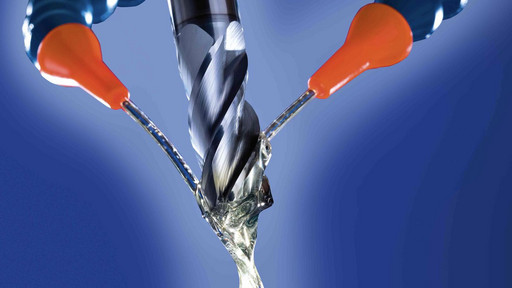
CNC milling machine and metalworking fluid in action

Glycerine-based metalworking fluids

Glycerine is a renewable raw material, familiar to many from its use as a moisturiser in cosmetic products. Furthermore, glycerine possesses interesting tribological properties and is also a highly attractive raw material for metalworking fluids.

Oemeta has found a way to harness the positive properties of this substance whilst avoiding the use of mineral oil-based chemicals.
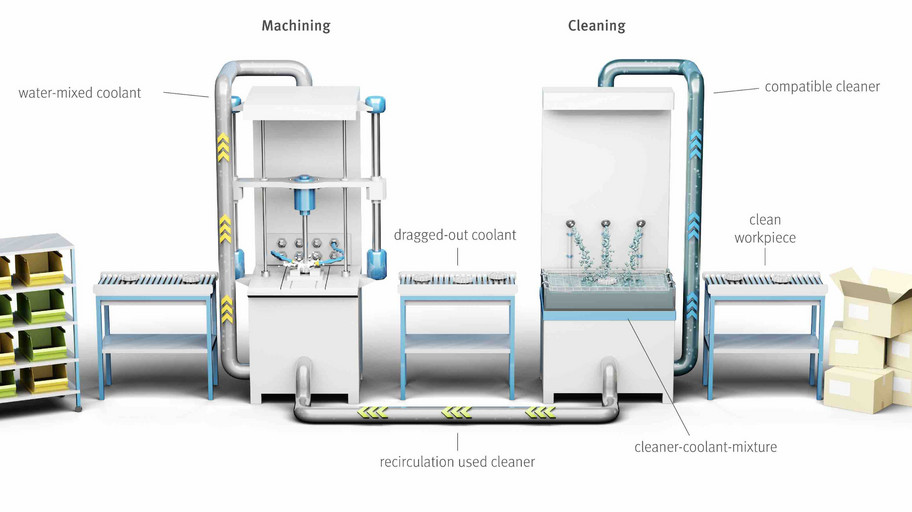
Metalworking fluid cleaning circuit

Recycling of purified machining oils

In many factories, machining oils are removed using aqueous component cleaners. The machining oil is separated from the cleaner using separator systems and then disposed of.

With a system comprising machining oil, cleaner and a post-treatment additive, the separated oil can be reused without any loss of quality, thereby reducing resource consumption and the volume of waste.

We do our utmost to ensure cost-effective and efficient production processes – whilst also taking environmental and sustainability considerations into account

What makes Oemeta a valuable partner when it comes to sustainable production processes? A look back at the company’s history shows that sustainability was already at the heart of Oemeta’s corporate strategy even before the term itself was in common use. Please do not hesitate to contact us if you have any questions, suggestions or ideas.

Oldest first
Newest first
2019
Wassermischbarer Kuehlschmierstoff spritzt aus Düse

ESTRAMET S 77

In 2019, Oemeta launched a new water-miscible metalworking fluid. ESTRAMET S 77 is a metalworking fluid made from synthetic ester oils which, when mixed with water, forms a translucent emulsion. This new product can be used at concentrations as low as 3.5 per cent, which reduces consumption compared with comparable high-performance metalworking fluids. Up to 50 per cent of the concentrate can be saved when filling the system for the first time or topping up.
About water-miscible metalworking fluids
2015
Cutting and grinding oils in machining

Gas-to-Liquids (GTL) oils

This product range provides an effective solution to the increasing demands of the sophisticated grinding and machining processes of the future. Oemeta’s new cutting and grinding oils are based on the latest generation of oils. In the so-called gas-to-liquid (GTL) process, very pure synthetic base oils are produced from natural gas. These are free from organic nitrogen, heavy metals, zinc and chlorine compounds.
About cutting and grinding oils
2013

Development of products based on re-refined materials

For years, the proportion of used lubricants in industry worldwide has been growing. These are processed using complex procedures. This complex recycling process, also known as re-refining, produces base oils suitable for industrial use. Oemeta has been using these base oils since 2013.
View our products
2010
Two-component lubricant for machining

Compatible MWF/cleaning systems

The marketing of the HYCUT multifunctional oil system highlights the sustainability potential offered by the use of compatible component cleaner and MWF products. Since 2010, a product range has been available that enables the recycling of MWF in aqueous cleaners. This allows for a significant reduction in the consumption of raw materials and the volume of waste generated.
About HYCUT products
2005
Lubricate the workpiece with metalworking fluid

Biocide-free metalworking fluids

From 2005 onwards, Oemeta will be launching a new generation of completely biocide-free MWF. This product range makes it possible to dispense entirely with the use of physiologically harmful biocides whilst still ensuring a long service life and stable operating conditions for the MWF.
View our products
1995
Components of oil in a microscopic image

In the mid-1990s, Oemeta launched a revolutionary multifunctional oil system onto the market.

HYCUT is free from mineral oil and based on renewable raw materials; thanks to its multifunctional applications, it is suitable for establishing an in-house circular economy. This makes it possible to combine occupational health and safety, environmental protection, resource conservation, and performance and cost optimisation within a single concept. This has been impressively demonstrated in an exemplary life-cycle assessment (LCA) of the production of car crankshafts.
Download the Life Cycle Assessment (LCA) study
1982
CNC milling machine and metalworking fluid in action

ESTRAMET

In the early 1980s, Oemeta became the world’s first manufacturer to launch mineral oil-free, water-miscible, high-performance MWF based on base oils derived from renewable raw materials. The result: significantly lower application concentrations when machining aluminium alloys and reduced environmental risk thanks to biodegradable base materials.
About water-miscible metalworking fluids
1975

Low-maintenance metalworking fluids

In the mid-1970s, Oemeta launched its boron-based, low-maintenance MWF onto the market. The result was a significant reduction in the use of toxic biocides, a longer product service life and a lower volume of waste.
Load more

The company’s history shows that Oemeta has always been committed to developing high-performance products and solutions that take into account not only technical requirements but also environmental and sustainability considerations.