
 Search
Our Company's Carbon Footprint
Oemeta continuously tracks and assesses the impact of its business activities on the environment and climate. Calculating the company’s carbon footprint is a key component of our sustainability strategy.
Oemeta is committed to consistently reducing its greenhouse gas emissions and aligning its climate strategy with the 1.5°C target of the Paris Agreement. Through continuous improvements in production, energy efficiency, and the supply chain, we are actively contributing to climate protection.
On this page, learn more about our efforts to further reduce our environmental footprint and bring about positive change in the world.
What is a company's carbon footprint?
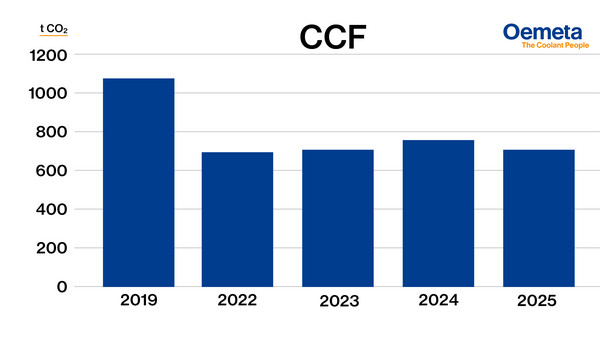
By calculating its Company Carbon Footprint (CCF)—also known in German asa company’sCO2 footprint—a company can determine how much greenhouse gas—converted toCO2 equivalents—is emitted as a result of its own business activities.
A carbon footprint assessment is conducted to identify high-emission business areas, identify specific opportunities for reduction, and develop measures to sustainably reduce a company’sCO2 emissions.
The annual CCF calculation allows the company to track trends inCO2 emissionsso that it can take corrective action ifemissions increase in certain areas or if measures fail to achieve the expected results. Oemeta’s goal is to reduce its CCF by 5.0% annually over the next few years through its own initiatives.
A selection of measures we have taken so far to reduce our CCF:
- Green Electricity: Procurement of certified and renewable electricity.
- Use of heat pumps: To heat the tank farm for raw materials used in the production of metalworking fluids
- Lighting: Replacement of old light bulbs with LED lamps in offices, hallways, outdoor areas, and production and storage facilities.
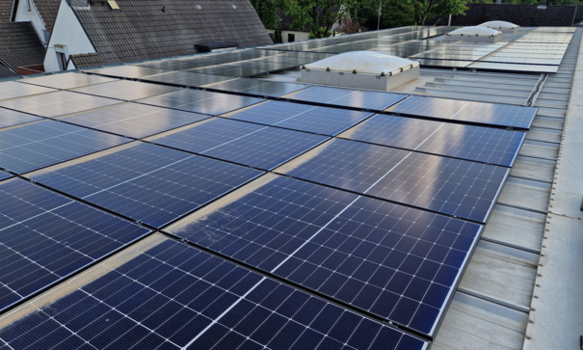
- On-site electricity generation: Installation of a PV system with a capacity of 99.96 kWpeak.
- Building Climate Control: Utilizing the heat pump function of the existing air conditioning systems to effectively heat the buildings with green electricity, instead of gas heating systems.
- Internal Consumption: Through effective management, internal consumables (e.g., paper), production consumables, as well as fuel, heat, electricity, and water have been steadily reduced.
- E-mobility: Gradual transition of the company’s vehicle fleet to electric vehicles and leasing options for e-bikes.
- Additional measures: For example, reducing waste, optimizing manufacturing processes for energy efficiency, and planning travel while takingCO2 emissions into account.


 Germany
