
 Search
About Gehring
Christoph Willi Gehring founded his company in 1922 and built the first honing machine in 1935. He likely did not realize at the time that this “finer and more precise surface finishing of round bores” would one day make him the global market leader in this machine technology.
Today, basic honing machines and systems are manufactured in Naumburg and integrated into production lines in Ostfildern near Stuttgart. For example, a 24-meter-long system is located in neighboring Bad Cannstatt and processes V6 engine blocks with a cycle time of just 32 seconds. Steel, stainless steel, aluminum, and cast iron are processed to manufacture these high-precision components. The primary processes used are turning, milling, drilling, and grinding.
Oemeta as a MWF Partner
Without the honing machines from global market leader Gehring, the power density of today’s Formula 1 engines would be unthinkable. To ensure that the machines, equipped with their legendary dynamic tools, meet the specified tolerances, Gehring’s component plant in Naumburg must operate with even greater precision. The goal of the initiative was to increase tool life, reduce complexity, and improve health and environmental sustainability.
To achieve this, the company relied on Oemeta for the metalworking fluid (MWF) used in machining. The result: tool life increased by two and a half times, complexity was drastically reduced, and both employees and the environment benefited as well. This is made possible by the intelligent use of the innovative two-component HYCUT system.
The specialized grinding technique used in honing places the highest demands on the metalworking fluid.
“95 percent of our engines go to the automotive industry,” emphasizes Gerhard Simon, “and that includes Formula 1 racing teams,” says the managing director of Gehring Naumburg GmbH & Co. KG. To ensure that these small 1.6-liter V6 engines with high power density deliver the estimated 800–1,000 horsepower at 15,000 rpm, the cylinders must be honed to perfection with an accuracy of half a micrometer. But honing plays a crucial role not only in Formula 1; this technology is used today in every internal combustion engine worldwide.
The special grinding technique used in honing with Gehring machines optimizes combustion in the engine, reduces fuel consumption, improves cleanliness, and ultimately ensures compliance with health regulations. It goes without saying that mechanical engineering must deliver equally high performance in this context. To this end, those responsible have been using Oemeta’s multifunctional two-component MWF HYCUT since 2014. The local sales and service partner is HMH Mineralöle.
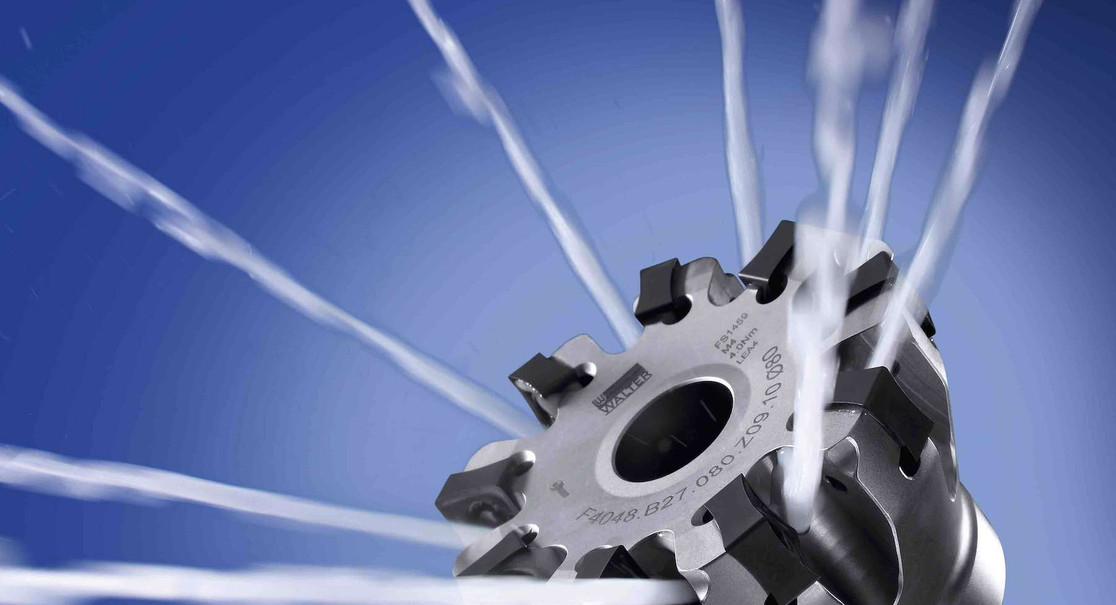
HYCUT
At the heart of the HYCUT system are ester-based oils. These provide superior lubrication and reduce tool wear. In addition, the products are highly resistant to aging. Furthermore, the high cleaning power of the synthetic oils ensures clean machines and components, as well as excellent material removal performance.
Reduction in the variety of MWF coolants and advances in manufacturing technology
In addition to the high surface quality that Gehring prioritized, the goal was also to reduce the environmental impact and meet stringent health and safety requirements. Regular measurements, good on-site service, and quick responses were to become standard practice. The goal was also to move away from the rigid cycles under which the individual containers on the machines were stubbornly refilled every nine months. And last but not least, Gehring also wanted to reduce the high disposal costs.
Extremely hard water, foreign oil, and foaming with the previous product
Working closely together, QMB Lutz Geweniger, maintenance technician Ralf Köppl, the Oemeta field service team (Torsten Schindler and Stephan Ebeling), and HMH area manager Peter Wachsmuth quickly achieved these goals. But there were challenges, such as the very hard water in Naumburg, with a hardness of 35 °dH and a chloride content of 60 mg/l. In addition, there were many MWF mixing stations with limited space, as well as issues with foreign oil and foaming with the previous product. And the variety of MWF coolants also needed to be reduced.
“In the past, everyone had their ‘own’ oilfor ‘their process and their machine.’ We didn’t want to deal with that complexity and all the special requirements anymore. We wanted to find a multifunctional oil that meets all requirements,” says Lutz Geweniger, who is responsible for occupational safety at Gehring.
The search was on for the right metalworking fluid that met technical, environmental, and health requirements.
Stephan Ebeling and Torsten Schindler are familiar with such requirements and know how to address them, even though they recognize “that MWF is a highly complex issue in terms of technology, environmental management, and occupational health.” With Oemeta’s own product, HYCUT, they immediately had a suitable multifunctional two-component MWF in mind. At the heart of the HYCUT system are ester-based oils that can be used as machining oil, MWF, or hydraulic fluid; they are compatible with one another and can thus eliminate the need for intermediate cleaning, for example.
Adaptation to different process, material, and lubrication requirements.
As a cutting and grinding oil, the water-miscible HYCUT offers extremely high lubricating performance, thereby significantly reducing tool wear. Because it is made from synthetic ester oils, it is highly resistant to aging. This ensures long service life. In addition, its high cleaning performance keeps machines and components clean and, especially during grinding, ensures exceptionally good material removal rates.
What makes HYCUT unique as an emulsion is the ability to control the oil and additive separately. This ensures perfect adaptation to different process, material, and lubrication performance requirements. Throughout the emulsion’s service life, the individual components can be replenished as needed. Once the appropriate product was selected, the next step was to implement a centralized supply system while taking into account the requirements of the turning, drilling, milling, and grinding processes.
Four mixing stations for four production processes.
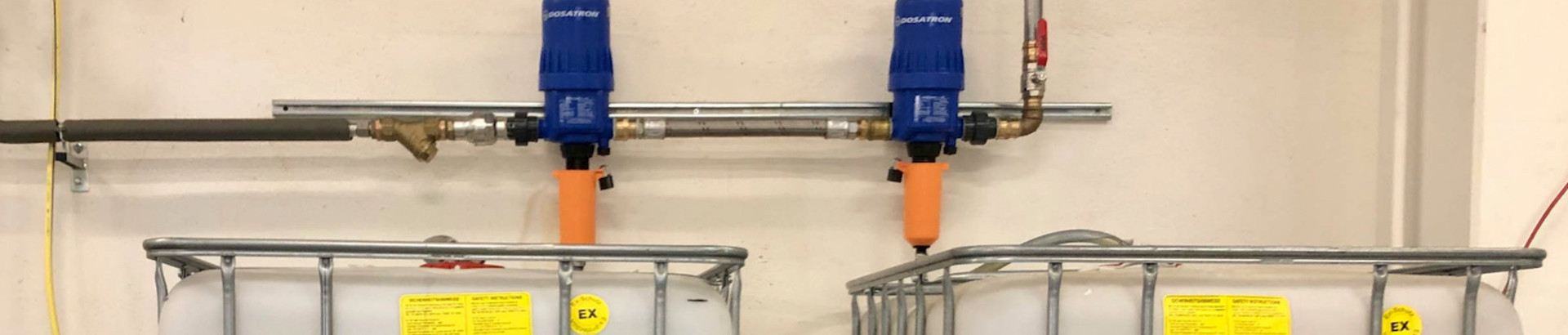
Two 1,000-liter tanks were installed in a central location, one for HYCUT ET 46 and one for the BX additive. In addition, piping—including hose reels and dispensing nozzles—was installed all the way to the MWF tanks. Dosing is performed using Dosatron mixing units. Four stations are supplied via hose reels and dispensing nozzles and divided according to the machining process.
Depending on the machining operations, the concentration of the individual components is controlled here to ensure the required dosage. This ensures that every manufacturing process is supplied with the optimal mixture as machining oil or MWF.
For machining, just 3–4% HYCUT ET 46 and 3% Additive BX are sufficient; for grinding, 1–3% HYCUT and 3% Additive BX. With the previous product, concentrations of over 10% were required.
“One result was immediately noticeable,” reports Geweniger, “the air quality in the shop improved very quickly, and the employees felt more comfortable.” Ebeling explains why: “Because of its droplet size, the ester-based HYCUT produces fewer aerosols.” Further improvements: The complexity caused by using many different oils was eliminated; all machining processes produced better surfaces; cutting performance increased; and the tools lasted longer. “Above all, however, the service life of the MWF improved,” reports Peter Wachsmuth of HMH, who initially handled the control and maintenance on-site. Through regular measurements and logging of key data—such as pH value, concentration, and other parameters—Gehring was able to implement a situation-dependent MWF refill strategy.
The following improvements have been made:
- Improving indoor air quality
- Reducing complexity caused by multiple oils
- Machining processes resulted in better surfaces
- Increased material removal rate
- Tools lasted longer
- Improved service life of the MWF
Lutz Geweniger from Gehring is pleased: “Instead of having to refill it every nine months, a single refill now lasts about two and a half years. We’re thrilled about that.” This means less frequent disposal, which is good news not only for the environment but also for the controller. At the same time, HMH trained the Gehring employees so that they can now handle maintenance and control on their own. QR code-based software is set to make the work even easier in the near future.
The bottom line is therefore entirely positive. All goals have been achieved. “This is also thanks to our chemists and application engineers in Uetersen, where Oemeta’s headquarters are located,” sums up Stephan Ebeling, “because they always manage to find the optimal solution for every on-site situation and every process.”
Oemeta (Wuhan) Co., Ltd.
Tangxun-lake Industrial Park
First Miaoshan Road, Economic Development Zone
Jiangxia District
Wuhan
Hubei, 430223
P. R. CHINA
T +86 27 818 009 11
F +86 27 818 009 10
E info@ oemeta.cn

 China
China
